
DETERMINISTIC
Pattern input
A drummer chooses a preset or writes a sequence using left, right and accent notation.
A metronome built around how drummers practise
Can a practice tool make the sticking, accents and timing of a drum pattern as clear as its tempo?
THE PROBLEM
A standard metronome gives you a pulse. For drummers, that is often only part of the exercise. The pattern may alternate hands, place accents in awkward spots, change subdivision or deliberately disappear for a few bars.
Keeping all of that in your head while trying to play cleanly turns practice into an admin task. The tool should carry the pattern so the drummer can focus on listening and playing.
WHAT I DID ABOUT IT
A browser-based metronome for drum practice. It accepts custom left and right hand sticking patterns, supports accents and includes presets for common rudiments.
It also includes tap tempo, tempo markings, visual beat feedback, gap training and polyrhythm modes. The timing is generated with the Web Audio API rather than relying on visual animation timing.
TRY IT YOURSELF
The application runs separately. It opens in a new tab.
Open the live Drum Metronome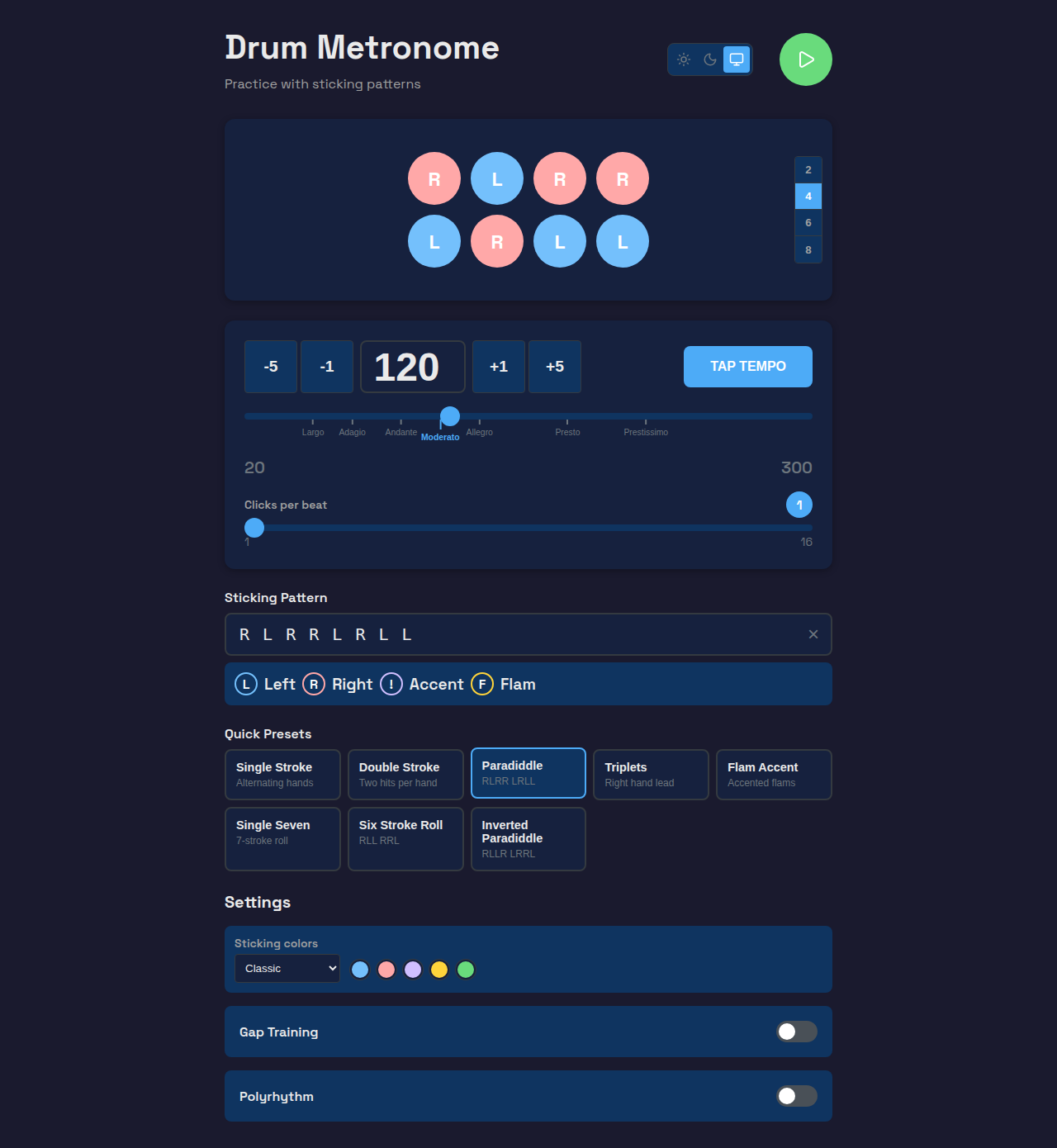
BEFORE AND AFTER
Generic pulseSticking-aware pattern
Counted mentallyHeard and shown
Manual adjustmentTap, marking or BPM
ARCHITECTURE
DETERMINISTIC
A drummer chooses a preset or writes a sequence using left, right and accent notation.
DETERMINISTIC
Tempo, subdivisions, gap training and polyrhythm settings define how the pattern should run.
DETERMINISTIC
A short look-ahead scheduler places clicks on the Web Audio timeline, so the audio timing does not depend on when the browser redraws the page.
STEP 04
The active beat and accents are shown alongside the audio cue, so the pattern remains legible while playing.
The important split is between interface timing and audio timing. The screen can lag without moving the click, because the audio engine owns the schedule.
OUTCOMES
A sticking-aware click could reduce the mental load of running a structured rudiment or coordination exercise.
Gap training and polyrhythm modes could make exercises that need several tools accessible from one practice loop.
Observed means measured in a real engagement. Estimated is reasoned from the work but not measured. Potential is what the approach makes possible. Nothing here is dressed up as more than it is.
WHAT FAILED
Browser timers are useful for deciding what needs to happen next, but they are not a reliable audio clock. A late callback can make a practice click feel uneven.
WHAT CHANGED
The scheduler now looks ahead from the Web Audio clock and queues clicks before they need to sound. The browser timer wakes the scheduler, while the audio engine keeps time.
CODE
The full Vue and TypeScript implementation is public, including the Web Audio scheduler and practice-mode components.
View the repositorySHARE AND ENJOY
Tell me what's going on. I'll come back within a business day, and if I'm not the right person for it I'll say so.